

Why Pool Water Needs to Be Replaced
Pool water doesn’t wear out, but it does fill up. Minerals, salt, and stabilizer build up, and your filter can’t remove them. Replacing the water is the dependable fix, and a full drain lets us clean the surface too.
Reasons to Replace Pool Water - What Builds Up
Stabilizer (Cyanuric Acid)
Stabilizer protects chlorine from sunlight, but it does not evaporate and it does not filter out. It climbs with every dose of stabilized chlorine, and at high levels it locks the chlorine up, making your pool prone to algae outbreaks.
The usual target is 30–50 ppm, and the industry’s long-standing ceiling is 100 ppm. Fresh water is the only way back down.
Calcium (Calcium Hardness)
Calcium comes in with the fill water and with some chemicals. Our tap water already carries around 300–350 ppm, so a pool starts with a high baseline and climbs from there.
As calcium, stabilizer, and dissolved solids rise, scale forms on PebbleTec, plaster, and tile. Careful chemistry slows it down, but at these levels scale can’t be avoided without draining more often.
Everything Else (Total Dissolved Solids)
This is the sum of the minerals, salts, and chemical by-products in the water. The industry guideline is to stay within 1,500 ppm of the pool’s starting level. Salt systems start higher, so the climb matters more than the raw number. High total dissolved solids makes your chemistry erratic and difficult to manage, and it increases chemical costs.
Why We Replace All the Water
A partial drain helps, but it can’t bring calcium down far enough. Tap water here already comes in above the minimum your pool needs, so a pool that is only partly drained starts out high and returns to its upper limits quickly.
Draining the whole pool gives calcium the lowest starting point available. Dissolved solids also end up in a much better place than they would after a partial drain.
When we drain a pool, we always recommend either an acid wash or a chlorine wash - or sometimes both. Bead blasting to clean the tile and other areas where minerals build up is also best done while the pool is empty.
Acid Wash
What it is. After the pool is drained, we apply a diluted acid solution to the surface and rinse it off. It dissolves the layer of calcium scale that builds up on PebbleTec and plaster, and it lifts many stains along with it.
Why do it. The stains are the part you can see. The calcium film is the bigger concern. If it stays on the surface, it can dissolve back into the fresh water after refilling, and calcium and dissolved solids jump up quickly, which works against the reason for draining. An acid wash starts the new water on a clean surface. PebbleTec handles this well. Plaster is softer, so it is treated more carefully.
Chlorine Wash
What it is. We apply a strong chlorine solution to the empty surface, work it in, and rinse it away. It clears algae and organic residue, such as leaf and plant stains.
Why do it.
We strongly recommend a chlorine wash for any pool that has struggled with algae. Removing the visible algae is not enough, because the roots stay behind on the surface and can grow back in the fresh water. A chlorine wash kills those roots. It is also gentler than an acid wash and is the right choice when stains come from organic material. It does not remove calcium scale, so when scale is the main issue we recommend the acid wash.
Tile Cleaning/Bead Blasting
What it is. We blast the waterline tile with fine glass beads at low pressure. This removes calcium and mineral buildup, stains, and chemical residue without using chemicals.
Why it’s the method we use. Calcium on tile hardens and bonds to the surface. Scrubbing and pumice take a lot of effort and can scratch, and acid is a poor fit for tile and grout. Bead blasting takes the buildup off without harming the tile, so the waterline comes back clean and even. Because the pool is already empty, the debris is also easy to clean up.
Does Every Pool Need It?
Timing depends on your pool’s test results and your fill water, and some pools go longer between drains than others. A high reading on one measurement can matter much more than another.
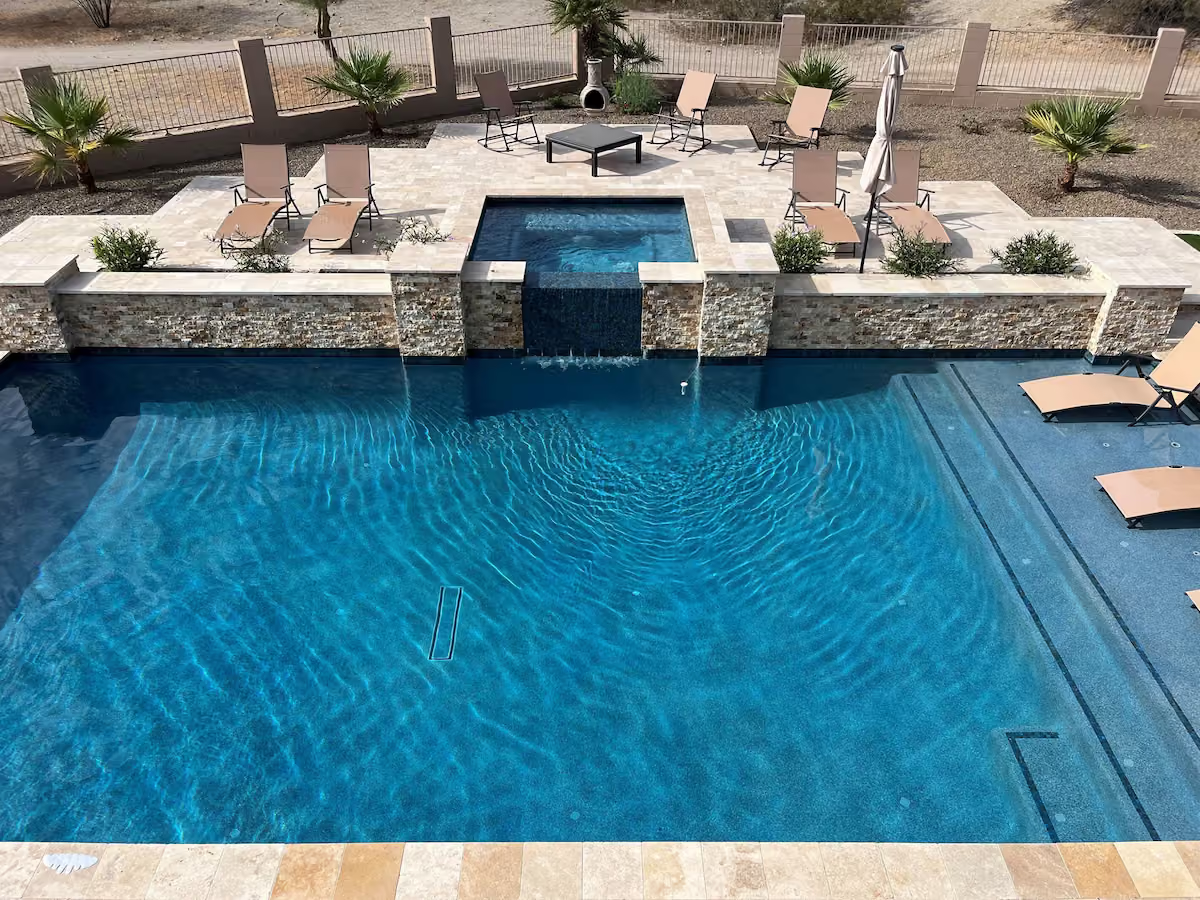
Maintenance Options When the Pool Is Empty
POOL DRAINING + A WHOLE LOT MORE!
We’re not just here for the occasional deep clean. Tukee Pools offers full-service weekly maintenance, leak detection, equipment upgrades, and a direct line you can text or call 24/7—all from a team that only serves Ahwatukee. One call, every pool need covered.
How We Reset Your Pool
Replace the Water
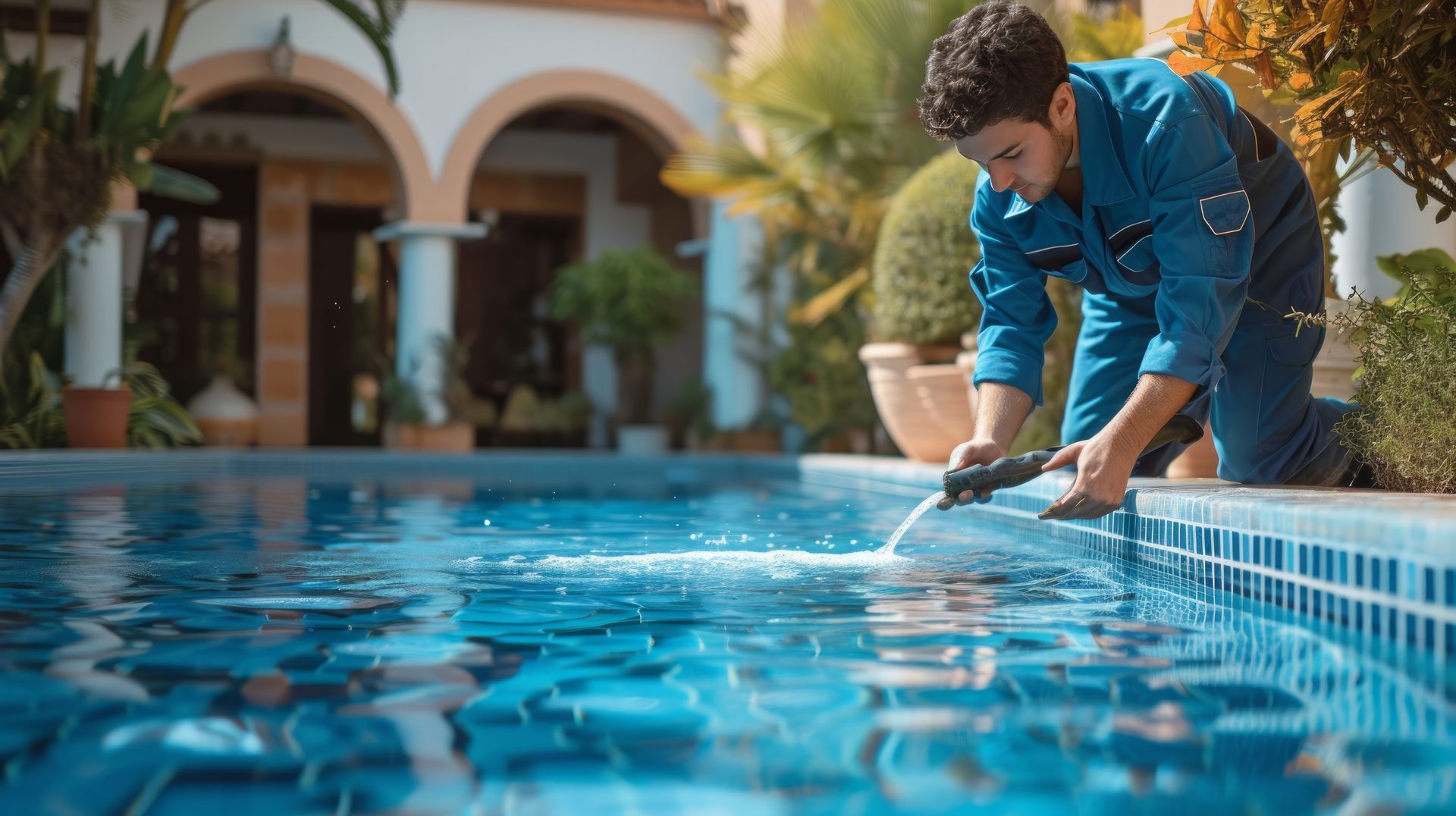
Replacing the water resets your pool to a clean starting point, and nothing else does that. We drain the pool, handle the timing around Arizona weather so the empty shell isn’t left sitting in the summer sun, and refill with fresh water.
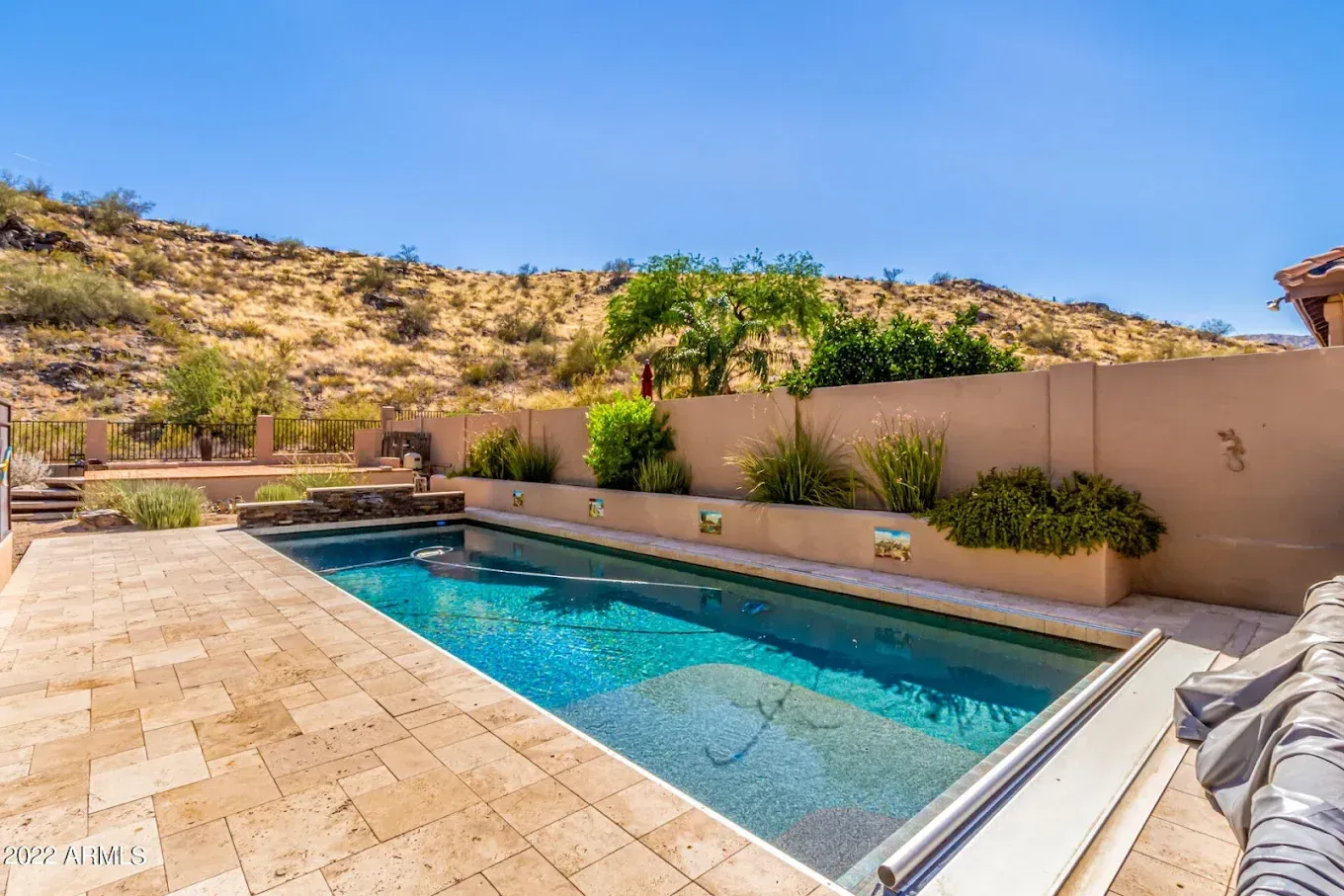
An empty pool also lets us see what the water was hiding: the condition of the surface, the tile line, and any stains or scale. Once it’s refilled, we rebalance the chemistry from scratch, so you start fresh instead of working around old readings.
Professional Tile Cleaning
That white crust along your waterline is mostly calcium, and it gets harder the longer it sits. It dulls your tile and gives algae and dirt a rough surface to cling to.
With the pool empty, we bead blast the entire tile line, going all the way around. It uses fine glass beads at low pressure, with no harsh chemicals. Many pools that look like they need new tile just need the buildup taken off. When we finish, the tile shows its real color again and the waterline looks even and clean.
Decalcify & Remove Stains
If the pool surface feels rough or chalky, or has staining that brushing never touches, calcium scale is usually the reason. An acid wash dissolves that layer and brightens the whole surface, and it lifts many stains along with it.
We look at the surface first and recommend an acid wash when scale or mineral staining is the main issue. Doing it while the pool is empty means the scale comes off before the fresh water goes in, so the new water isn’t picking calcium back up from the walls and floor.
Kill Algae at Its Roots
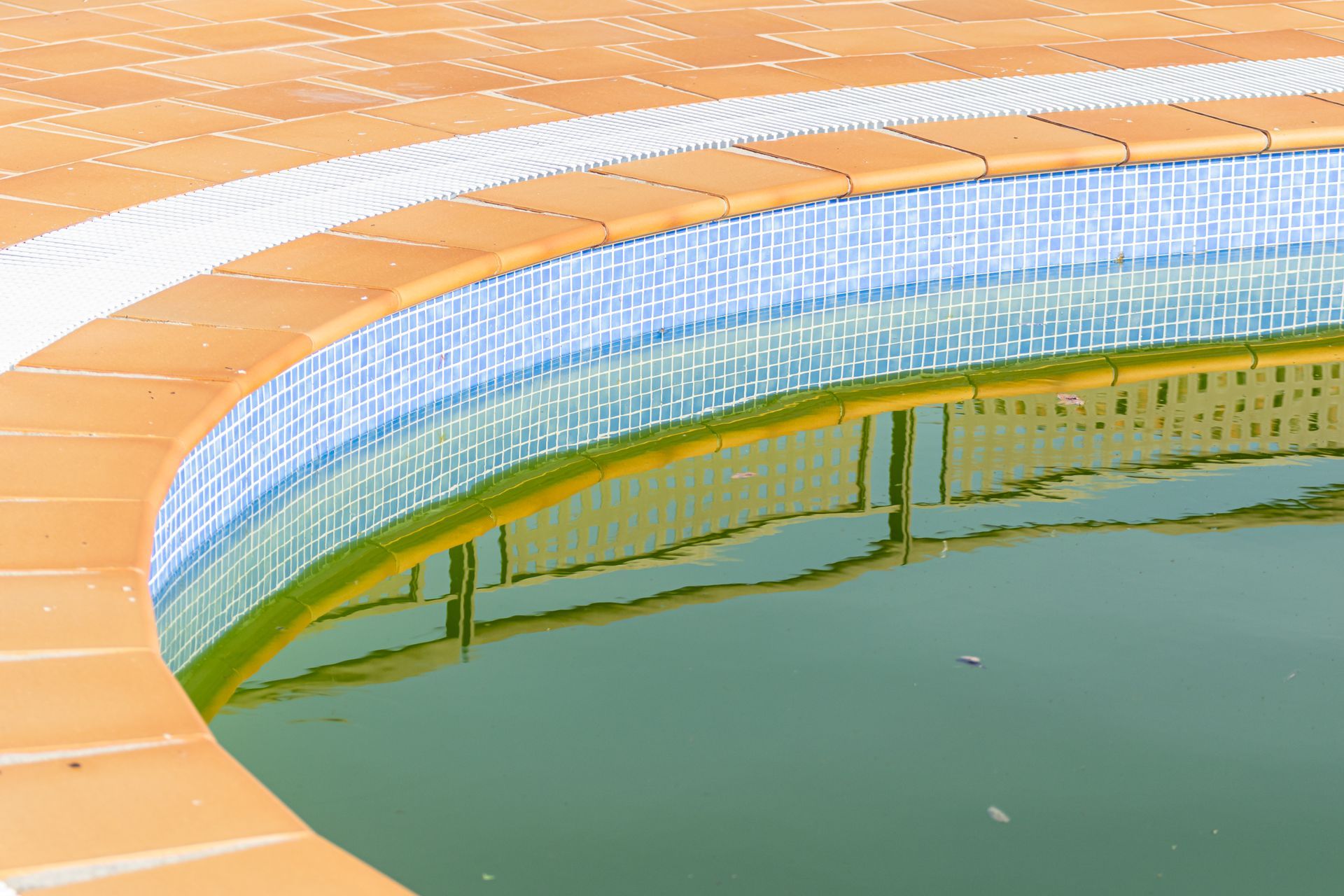
If your pool keeps turning green or has persistent black algae issues, the algae you can see in the water is only part of the problem. The roots live in the pool surface, which is why it comes back after you’ve treated the water.
A chlorine wash treats the surface directly while the pool is empty. It clears the algae and breaks down organic stains, like those left by leaves and plant debris. Paired with fresh water, it gives you a clean surface and clean water together. That’s the best chance of keeping algae from coming back.