
When to Drain Your Pool in Arizona
SERVICE REQUESTWondering when to drain your Arizona pool? Here's what you need to know.
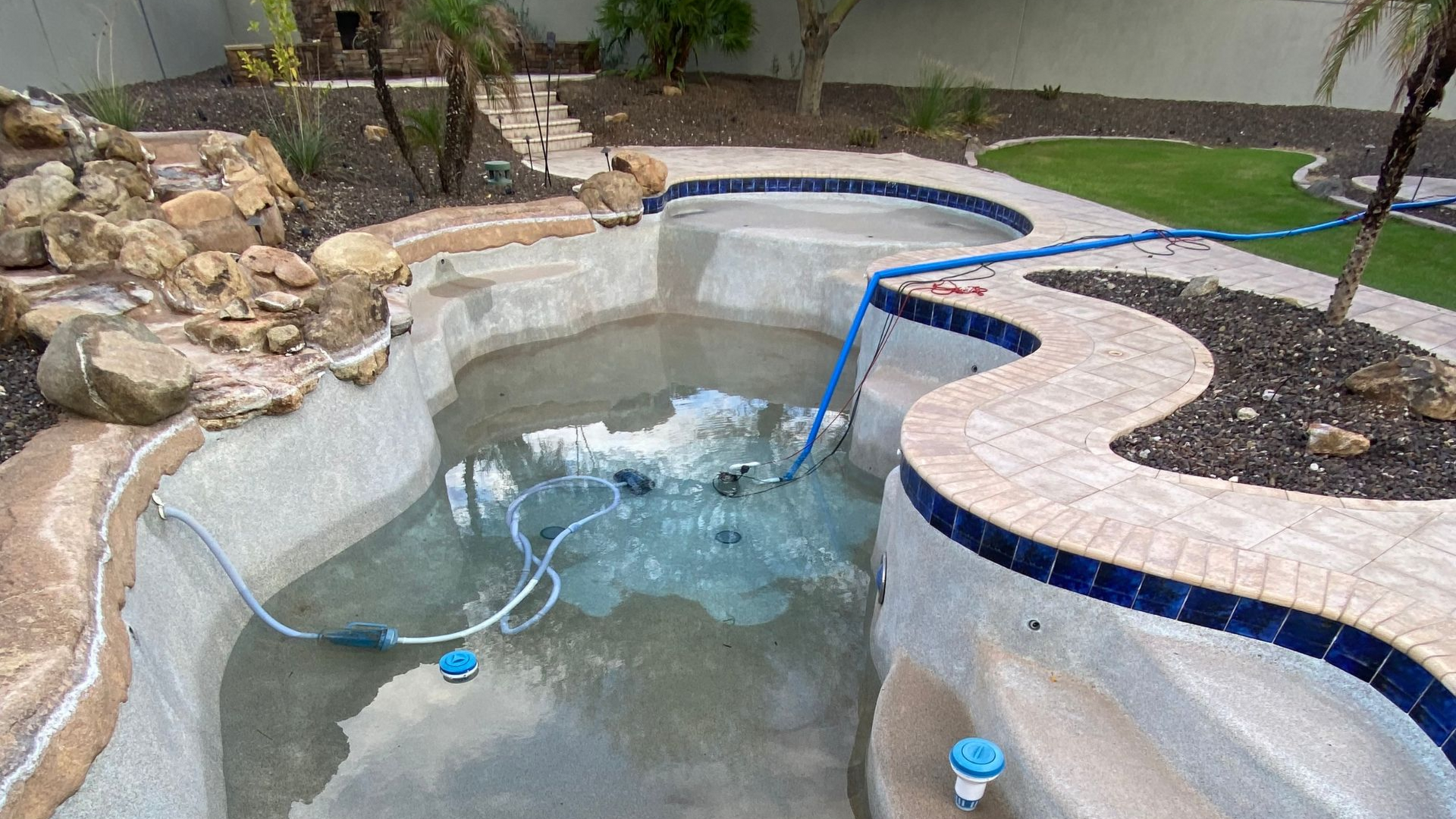
If you're a pool owner in Ahwatukee, AZ, you've probably wondered whether your pool actually needs to be drained, and if so, when the right time might be. The truth is that draining isn't something that needs to happen often, but when certain chemical levels get out of hand, it becomes essential for keeping your water safe, clear, and comfortable to swim in. In Arizona's desert climate, where evaporation concentrates minerals faster than in other regions, understanding the warning signs for three key measurements - TDS, calcium hardness, and cyanuric acid - is crucial for protecting your pool and your family.
Total Dissolved Solids (TDS)
Total dissolved solids is a measurement of everything in your pool water - minerals from tap water, chemicals you've added, and particles that build up over time. In Ahwatukee, where tap water already contains 200-400 ppm of dissolved solids, your pool water can climb quickly, and when TDS gets too high, chlorine stops working effectively.
The acceptable range for TDS is below 1,800 ppm, but once you reach 1,800-2,500 ppm, it's time to plan a drain as chemicals lose effectiveness. Above 2,500 ppm, drain as soon as possible - you'll see persistent cloudiness or algae despite proper treatment.
Calcium Hardness
Arizona's hard water means calcium is always building up in your pool, and this mineral doesn't evaporate - it just keeps accumulating until you dilute it by draining. The ideal range sits between 200-400 ppm, which protects your pebble tech or plaster while keeping equipment running smoothly.
When calcium climbs to 400-800 ppm, you'll see white scale on tile and cloudy water. Once it exceeds 800 ppm, scale forms rapidly on heater elements and salt cells, making draining necessary to save your equipment.
Cyanuric Acid (CYA)
If you use chlorine tablets or shock, you're adding cyanuric acid every week, and unlike other chemicals, it never breaks down or evaporates. Some CYA is necessary in Arizona's intense sun to protect chlorine from UV rays, but too much makes chlorine ineffective at killing bacteria and algae.
The acceptable range is 30-80 ppm for Arizona's climate. When CYA reaches 80-100 ppm, plan a drain soon, as you'll use excessive chlorine just to keep water clear. Above 100 ppm, drain immediately - the CDC and WHO set this as the maximum because chlorine can't sanitize effectively at these levels.
Best Time to Drain
Timing matters in Arizona's climate, especially for plaster pools. The best window is fall or early spring when temperatures stay below 90°F, as draining during summer heat can crack your plaster. Most Ahwatukee pool owners drain every 2-3 years to keep chemical levels in check, though it depends on your tap water quality and evaporation rate.
At Tukee Pools, we test for TDS, calcium hardness, and cyanuric acid as part of our service, and we'll let you know when your levels are approaching the point where draining makes sense. Our team understands Arizona's unique water challenges and can help you plan the right timing for a drain and refill, so your pool stays crystal clear and your equipment stays protected.
Josh Hill